A Coordinated Offensive: The 'Epic Fury' Unleashed Against Iran
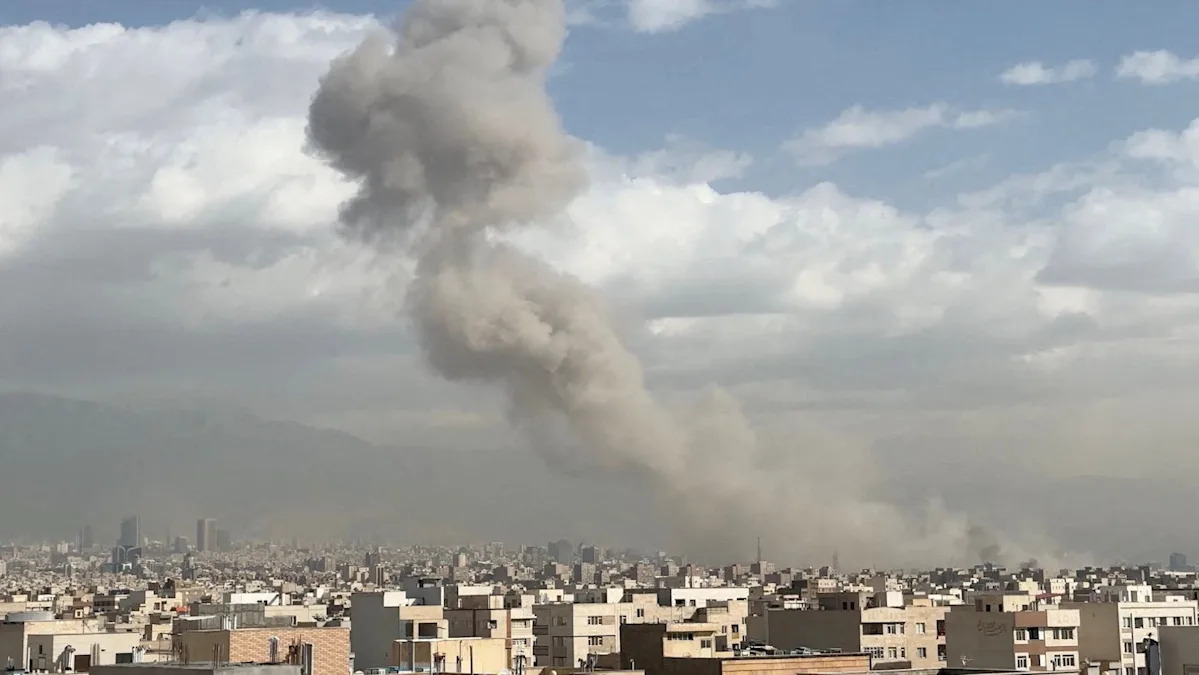
The geopolitical landscape of the Middle East has been dramatically reshaped following a series of significant military strikes launched by the United States and Israel against targets across Iran. This coordinated offensive, dubbed "Operation Epic Fury" by the Pentagon, marks a profound escalation in regional tensions and represents the second time within eight months that the Trump administration has employed military force against the Islamic Republic. The attacks have ignited a volatile new chapter, with US President Donald Trump issuing a direct call to the Iranian people to "take the reins of their destiny" and rise against the ruling Islamic leadership that has governed since 1979. Initial reports indicated that the bombings seemed to target areas in close proximity to the offices of Iran's Supreme Leader, Ayatollah Ali Khamenei. However, local media quickly reported widespread attacks across the country, with columns of smoke visible in the capital, signaling the breadth and intensity of the operation. This powerful demonstration of force by the US and Israel aims not only to degrade Iranian military capabilities but also, as articulated by both Trump and Israeli Prime Minister Benjamin Netanyahu, to create conditions conducive to a fundamental shift in Iran's political structure.Trump's Bold Call for Regime Change and the Unconfirmed Demise of Khamenei
Central to the US strategy is President Trump's explicit advocacy for regime change. In a public video message, Trump confirmed that "significant combat operations" were underway and urged Iranians to seize control of their government once the attacks concluded. Israeli Prime Minister Benjamin Netanyahu echoed this objective, asserting that the joint operation was designed to empower the Iranian populace to assume power. Adding another layer of unprecedented development, President Trump announced on his Truth Social platform that Ayatollah Ali Khamenei, Iran's Supreme Leader, had died. He described Khamenei as "one of the most evil people in history" and framed his death as an act of justice for the Iranian people, Americans, and victims worldwide. Trump declared this "the greatest opportunity for the Iranian people to reclaim their country." This claim, while widely reported by international news agencies like Reuters citing a senior Israeli official, remains unconfirmed by Iranian authorities. Shortly before Reuters published its report, Netanyahu had also hinted at signs of Khamenei's death without explicit confirmation. If true, the death of such a central figure would undoubtedly plunge Iran into a leadership crisis and could profoundly alter the trajectory of the nation. For a deeper dive into the reports surrounding his status, read Iran's Supreme Leader Khamenei Reported Dead Amid US-Israel Strikes.Iran's Swift Retaliation: A Regional Ripple Effect
True to its long-standing warnings, Iran swiftly retaliated against the US and Israeli strikes, launching a barrage of missiles and drones. This counter-offensive specifically targeted Israel and various American military installations in Bahrain, Kuwait, and Qatar. The scale and coordination of Iran's response underscore its resolve and capacity to project power across the region. State media also reported a tragic casualty, with at least one death confirmed in the capital of the United Arab Emirates due to shrapnel from an Iranian missile. This immediate and forceful response from Tehran highlights the dangerous escalation spiral inherent in the current conflict. The targeting of multiple locations, including US assets, signifies Iran's readiness to engage a broader spectrum of adversaries and demonstrates the profound risks involved in direct military confrontation. The Middle East, already a crucible of complex political and sectarian divisions, now faces an even more precarious future as these actions threaten to ignite a wider regional conflagration.Navigating the Aftermath: Trump's Strategic Options for "Epic Fury"
In the wake of the joint US-Israeli assault, President Trump outlined various "exit strategies" for Operation Epic Fury during an interview with Axios. He presented two starkly different paths: either "prolong it and take control of everything" or conclude it "in two or three days" with a stern warning to Iran to avoid rebuilding its nuclear and missile programs. "I can prolong it and take control of everything, or finish it in two or three days and tell the Iranians: 'See you again in a few years if you start rebuilding (your nuclear and missile programs),'" Trump stated. This declaration reveals a strategic flexibility, suggesting that the administration is not locked into a single course of action. Regardless of the chosen path, Trump predicted that Iran would require "several years to recover from this attack." This assessment implies that the immediate goal of the strikes is to significantly cripple Iran's capabilities and deter future aggressive actions, thereby altering the balance of power in the region. Understanding the motivations and potential consequences behind these differing options is crucial for anyone monitoring the evolving crisis. For a comprehensive look at the strategic choices and the operation itself, consider reading Epic Fury in Iran: Escalation, Retaliation & Trump's War Options.Beyond the Headlines: Understanding the Geopolitical Stakes
The current crisis represents what analysts describe as an existential test for the Islamic Republic of Iran. Since the 1979 revolution, Iran has often found itself at odds with Western powers and regional adversaries, particularly the United States and Israel. The historical context of this antagonism is vital for understanding the present escalation. Decades of sanctions, proxy conflicts, and covert operations have created a powder keg, and these latest strikes threaten to ignite it further.The Implications for Regional Stability and Global Politics:
- Uncertain Leadership: The unconfirmed death of Ayatollah Khamenei introduces immense uncertainty into Iran's leadership succession, potentially leading to internal power struggles or a shift in the regime's direction.
- Heightened Proxy Warfare: An escalation could intensify proxy conflicts across the Middle East, involving groups in Yemen, Lebanon, Syria, and Iraq, further destabilizing an already fragile region.
- Oil Market Volatility: The Strait of Hormuz, a critical chokepoint for global oil supplies, is located near Iran. Any disruption could send oil prices soaring, impacting the global economy.
- International Diplomacy: The international community faces the immense challenge of de-escalating the conflict, with major powers potentially divided on how to respond to the US-Israel actions and Iran's retaliation.
- Humanitarian Concerns: An all-out conflict would undoubtedly lead to a devastating humanitarian crisis, displacing millions and causing widespread suffering.
Practical Insights for Observing the Conflict:
In such a rapidly developing and complex situation, it is important to:
- Verify Information: Be cautious of unconfirmed reports and seek information from multiple, credible news sources.
- Understand Historical Context: Recognize that current events are often rooted in decades of history, political grievances, and cultural dynamics.
- Consider Multiple Perspectives: Look beyond simplified narratives and try to understand the motivations and fears of all involved parties, including the Iranian populace.
- Monitor Diplomatic Efforts: While military actions dominate headlines, behind-the-scenes diplomatic efforts are crucial for conflict resolution.