Epic Fury Unfolds: Escalation, Retaliation, and Trump's War Options in Iran
The Middle East finds itself at the precipice of a potentially transformative conflict, as the United States and Israel have launched a coordinated military campaign against targets across Iran. Dubbed "Operation Epic Fury" by the Pentagon, this offensive marks a dramatic escalation, challenging the very foundations of the Islamic Republic that has governed since 1979. With
eeuu ataca irán being the core focus, the world watches closely as the conflict unfolds, characterized by immediate retaliation and an uncertain future shaped by President Trump's declared "war options."
The Coordinated Offensive: US & Israel Unleash "Epic Fury"
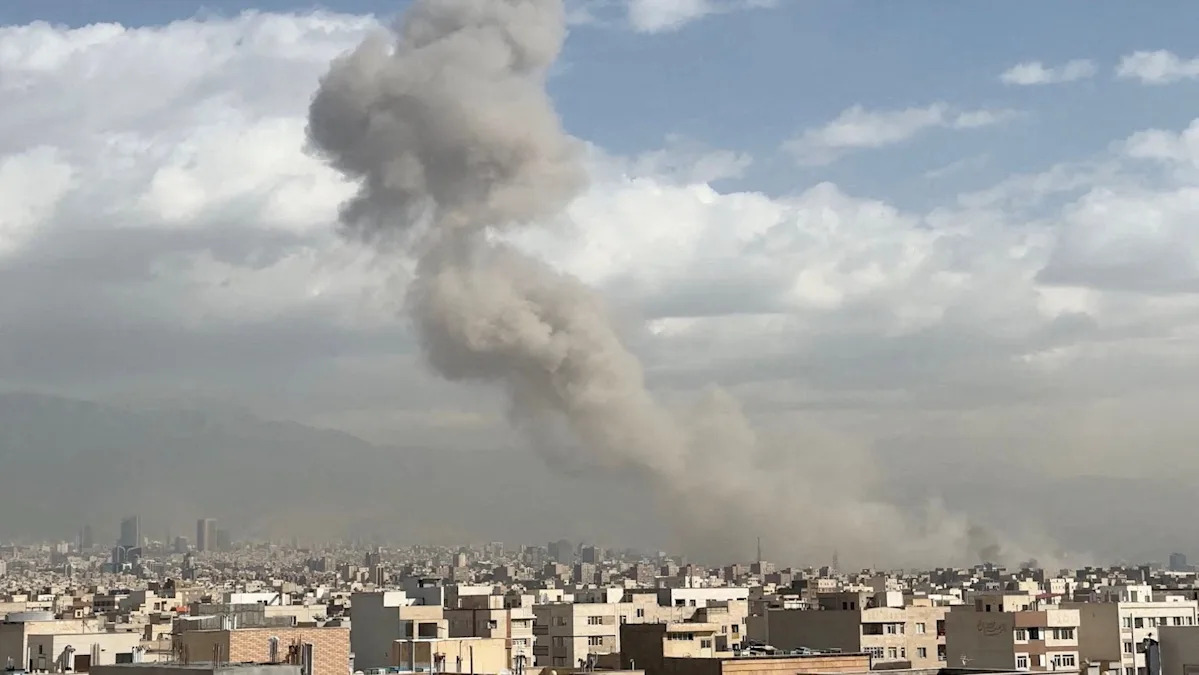
The initial wave of strikes, a joint American and Israeli endeavor, sent shockwaves throughout the region and beyond. Reports from local Iranian press detailed attacks across the nation, with columns of smoke seen rising in the capital, Tehran. Crucially, early bombardments appeared to target areas in close proximity to the offices of Iran's Supreme Leader, Ayatollah Ali Khamenei, signaling a clear intent to strike at the heart of the regime.
In a direct and unequivocal video message, President Donald Trump confirmed that "important combat operations" were underway. His rhetoric was stark: he directly urged the Iranian populace to "take the reins of their destiny" and rise against their current leadership. This explicit call for regime change was swiftly echoed by Israeli Prime Minister Benjamin Netanyahu, who articulated that the joint operation aimed to create conditions conducive for the Iranian people to assume power. This marks the second instance within an eight-month span where the Trump administration has deployed significant military force against the Islamic Republic, underscoring a hardening stance. Analysts suggest this coordinated offensive represents an "existential test" for the Iranian regime, challenging its legitimacy and control in an unprecedented manner. For a deeper dive into these initial strikes and the call for regime change, read our detailed report:
US & Israel Strike Iran: Trump Urges Regime Change Amid Attacks.
Iran's Swift Retaliation: A Volley of Missiles and Drones
True to its long-standing warnings, Iran did not hesitate to respond. The Islamic Republic launched a formidable wave of missiles and drones, targeting both Israel and American military installations situated across the Gulf states. Specific reports cited attacks against US facilities in Bahrain, Kuwait, and Qatar. The repercussions extended even further, with state media confirming at least one fatality in the capital of the United Arab Emirates, resulting from shrapnel from an Iranian missile.
This immediate and multi-front retaliation underscores Iran's determination to project strength and deter further aggression, even in the face of a combined US-Israeli offensive. The targeting of US assets in various Gulf nations demonstrates Iran's regional reach and its capacity to engage multiple adversaries simultaneously. Such a broad-spectrum response inevitably raises concerns about regional stability and the potential for a wider conflagration, as any further tit-for-tat exchanges could rapidly spiral beyond control, impacting shipping lanes, oil markets, and the lives of millions.
The Enigma of Leadership: Jamenei's Reported Demise and its Fallout
Perhaps the most dramatic and potentially game-changing development amidst the ongoing conflict is the unconfirmed report of Supreme Leader Ayatollah Ali Khamenei's death. In a message posted on his Truth Social network, President Trump declared, "Jamene, one of the most evil people in history, died. This not only is justice for the Iranian people, but for all Americans and the people of many countries of the world who have been killed or mutilated by Khamenei and his band of bloodthirsty thugs." Trump further asserted that this represented the "greatest opportunity for the Iranian people to reclaim their country."
The gravity of this statement cannot be overstated. Reuters subsequently reported, citing a senior Israeli official, that the body of the Supreme Leader had been found. While Israeli Prime Minister Benjamin Netanyahu also hinted at indications of Khamenei's death without outright confirmation, official Iranian sources have, to date, offered no corroboration regarding his fate. This critical vacuum of information creates immense uncertainty, fueling speculation about a potential power vacuum within Iran's intricate political and religious hierarchy. Should Khamenei's death be confirmed, it would undoubtedly trigger a contentious succession process, potentially leading to internal instability or a reshuffling of the clerical establishment, profoundly impacting Iran's future trajectory and its approach to both domestic governance and international relations. Understanding the full implications requires a close look at this evolving story:
Iran's Supreme Leader Khamenei Reported Dead Amid US-Israel Strikes.
Trump's Strategic Calculus: War Options and the Road Ahead
The operational name "Epic Fury" itself suggests a comprehensive and powerful military campaign, yet President Trump has openly discussed a range of "exit routes" for the joint US-Israeli attack on Iran. In a telephone interview with Axios, Trump outlined a duality of choices, indicating his strategic flexibility. He pondered the possibility of a prolonged engagement to "take control of everything" or a swift conclusion, wrapping up the operation "in two or three days."
"I can prolong it and take control of everything, or finish it in two or three days and tell the Iranians: 'We'll see you again in a few years if you start rebuilding (your nuclear and missile programs),'" Trump stated. He expressed confidence that, regardless of the chosen path, Iran would require "several years to recover from this attack." This declaration highlights a multifaceted approach: on one hand, the explicit threat of extensive military occupation or systematic dismantlement of Iranian capabilities; on the other, a quicker, punitive strike aimed at setting back their military and nuclear ambitions.
These options suggest a strategic goal that goes beyond mere deterrence, potentially aiming for a profound and lasting impact on Iran's capacity to develop advanced weaponry or project regional influence. The "years to recover" prognosis, whether accurate or a calculated psychological tactic, underscores the severe economic, military, and political toll such an operation is designed to inflict. The very public discussion of these strategies, while potentially providing insight into US intentions, also serves as a direct message to the Iranian leadership, aiming to shape their calculations in the midst of this escalating crisis.
Conclusion: A Region on Edge
The "Epic Fury" operation, marked by coordinated US-Israeli strikes, Iran's immediate and forceful retaliation, and the dramatic, yet unconfirmed, reports regarding Supreme Leader Khamenei's fate, has undeniably thrust the Middle East into an era of profound uncertainty. The explicit call for regime change from the highest levels of American and Israeli leadership, coupled with President Trump's articulated "war options," signifies a new chapter in the complex relationship between the West and Iran. As the dust settles from the initial waves of aggression and counter-aggression, the world holds its breath, aware that the decisions made in the coming days and weeks could redefine the geopolitical landscape for decades to come, with far-reaching consequences for regional stability, global energy markets, and international security. The immediate future for Iran and the wider Middle East remains poised on a razor's edge, demanding continuous vigilance and nuanced analysis.